By Jack Smith modified Dec 31, 2025
~ 4 minutes to read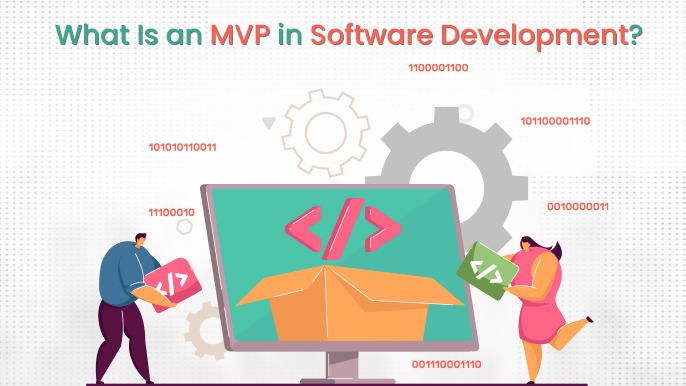
A lot of new software projects fail before they even get real users. One common report shows that about one-third of failed startups say the biggest reason was “no market need.” That means the team spent months building something people never wanted in the first place.
That is the reason why the MVP approach has gained such popularity. Many startups either build this first version themselves or work with an mvp development company to launch faster.
You create a small version rather than creating a large product that might or might not work, you launch that and then see how people use it and make it better.
Building software is risky, but an MVP helps reduce that risk by testing the core idea with real users before investing in full development. You release a small version, observe the reactions of real users and make more adequate decisions afterwards. This guide defines MVP, what to consider prior to developing one and how it relates to other popular terms of the product.
Before you can begin, it is a good idea to slow down a little and answer a few simple questions. The following questions ensure that your MVP is minimal, focused and helpful.
Think of a real person. Not “everyone.” Not “any user.”
Pick one group. Maybe it’s small business owners. Maybe it's parents. Maybe it’s students who need help managing homework. The MVP should speak to one clear group. When you try to impress everyone, you end up helping no one.
Write the problem using the most simple words.
For example:
''People forget their bills and start paying late.''
'' Students are unable to sort school notes.''
''Drivers are unable to locate quick parking during rush times.''
When you do not understand the problem, the solution will not be clear as well.
The majority of ideas begin small and then evolve into a list of features.
But for an MVP, ask:
''What is the ONE thing that the user must have?''
The user must be able to see value in that one feature.
Set a small budget. Set a short timeline.
The goal is not perfection. The goal is learning.
When your plan is too big, cut it down again.
Pick simple numbers.
Examples:
– How many users sign up?
– What is the rate of coming back after a week?
– How many complete the primary action (such as making a project or saving a note?
You don’t need complicated dashboards. You just need a few signals.
Plan how you will talk to users.
A short message box.
A simple email link.
A fast survey.
Real feedback shapes your next steps more than any planning document ever could.
An MVP, or Minimum Viable Product, is the simplest working version of a product that still solves a real problem. It doesn’t need advanced design. It doesn’t need every feature you dream of. But it must do its main job clearly.
Here is the meaning of each word:
Teams build an MVP to answer important questions fast:
The aim is education, rather than excellence.
A good MVP provides you with clarity without wastage of time.
Think of it like this:
When the end product is a full restaurant, an MVP is a small food stall with only one dish. When the dish is loved by people you can expand. When they do not, you find out too soon without losing it all.
To work well, an MVP should include some key aspects. Let’s look at them one by one in simple terms.
Your MVP must do one thing well. If it tries to do everything, it becomes slow and complex.
Example:
For a task app, the core value might be “Add and complete tasks quickly,” not “chat, calendar, team management, and reports.”
An MVP is not built for internal demos only. It is built for real users.
You might learn:
This feedback tells you what to build next.
An MVP is not “done” after launch. It is the start. Your team should be ready to:
You build, measure, learn, and repeat.
Because you only build the basics, you spend less. MVP thinking forces you to drop “nice-to-have” features that do not support the main problem. This reduces wasted work, or “development waste,” which many teams struggle with.
A good MVP is small but not a dead end. The code and design should leave room for future growth. You start simple, but you know how you might expand later if the idea works.
MVP is confused with other terms. We will examine them comparatively.
You can develop a prototype first to experiment with the idea, and when you are ready to launch anything, you can create an MVP.
PoC is about “Can we build it?”
MVP is regarding ''Should we build it?''
Many teams start with an MVP, then turn it into an MLP after they know there is a real need.
You might release an MVP to test the idea. Later, when the product is more complete, you release a beta.
You should not expect your MVP to look like a finished product. Its job is to learn, not to impress everyone.
MVP is an effective concept in software development. You do not put an entire system together at once but begin with a small version that can bring you value. This makes you learn quickly, mitigate big risks and know your users before you waste too much time or money.
The MVP approach gives teams confidence. It gives them direction. It keeps them honest. And most of all, it helps them build products people truly want — not products that only look impressive on paper.
When you apply the MVP thinking, your product will expand through wisdom rather than trial and error.
Jack Smith is an experienced technology writer who specializes in explaining complex technical concepts for a wide range of readers. With a passion for innovation, he creates compelling material on topics such as software development, emerging technologies, and digital trends. His work is intended to inform and inspire readers, bridging the gap between technological developments and practical comprehension. He also provides high-quality custom content for technology related platforms—contact us via email for more information.
No related articles found at the moment.